“Greetings A-Team Members! With the ending of summer upon us all, I am sure most people are looking back with fond memories of summers past. Personally, my summer was an exceptional learning opportunity; as I was fortunate enough to go to Kenya with the organization Free the Children for almost the entire month of July. While this trip was based primarily on helping people, I was able to learn about the threats faced to the African animals I (as I’m sure most of you do too) love so dearly.
While I was in Kenya, I was fortunate enough to speak with a Maasai Warrior, Phillip, who has his high school diploma and now works for Free the Children, a multi million-dollar international charity. This educated individual would, under the scrutiny of some conservationists, be considered a poacher; as he has killed two lions. However, what one must understand, as I came to, is that in impoverished countries with a considerably low percentage of educated individuals, people must do what is necessary to survive. As the same as almost all Maasai men, Phillip owns a herd of cows, which to him is more valuable than money. When the lions attacked his cows, he had to kill them in order to save his cows. The ultimatum to conservationists really isn’t an ultimatum at all; we would choose the endangered lion. However, when a wild animal is threatening to steal a percentage of your walking bank account, the ultimatum changes drastically. It becomes, not lion versus livestock, but animal vs the future of your family and your children. Not so easy to choose the lion now, is it?
When discussing this difficult topic with Phillip, he explained that, yes, we can give animals their own protected areas, but that doesn’t mean that they are going to stay there, which is when there becomes a grey area of what is right and what is wrong. I learned that the Kenyan government passed a law where if a lion attacks a cow, the owner of the cow is supposed to let the lion kill the cow, and then continue living. They are then supposed to contact government officials to get the government to subsidize the value of one cow. However, in a country where the government is considerably corrupt and poverty is a prominent problem, it leads to the issue of false claims, or the government does not follow through with their promises to the people.
While it seems like an impossible problem, I did learn about solutions. Creating National Parks and conservation areas lessens the conflict between humans and animals. Furthermore, by hiring government-employed park rangers and anti poaching patrols, the threats to wildlife lessens even more.
While on the trip, I also learned about less direct, but even more destructive causes to animal endangerment than tribesmen who kill to protect their cattle.
I learned that, in fact, lack of access to education that has the most devastating effect to animals and the environment. Put simply, when children are not educated, they are not aware of the impacts and concerns of climate change, habitat destruction, bushmeat trade, etc. Instead, they see poaching and bushmeat as a way to survive day-to-day. This is how the outside demand for poaching is able to sustain itself; it provides uneducated individuals with a way to break the cycle of poverty for their families, and it is human nature to want that for one’s self and their family. With more access to education in countries like Kenya, the leaders of tomorrow will be able to sustain themselves in ways other than poaching and bushmeat, and thus reverse the cycle of poverty for them, and the cycle of poaching the beautiful and diverse animals who live in this amazing country.
While corporate greed, climate change, factory farming, and government corruption are among the threats to wildlife in countries like Kenya, A-Team for Wilflife is providing a solution. With a focus on protecting endangered species from all of these threats, A-Team members- that’s you- are directly impacting the future of the wildlife we all love so dearly.
Keep being the amazing conservationists and animal lovers that you are! Together, we are destroying the threats to wildlife, and protecting the animals we all love so dearly. “
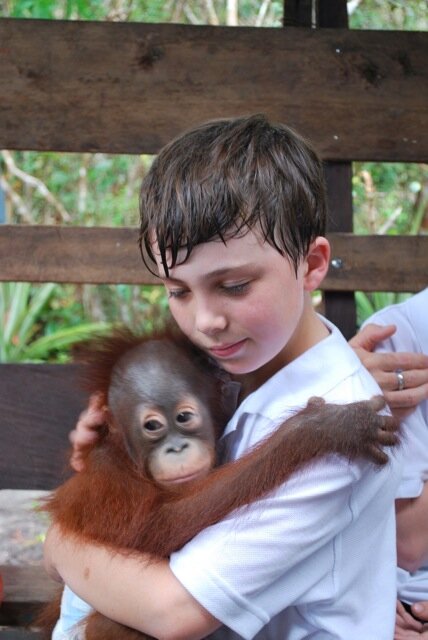


From Int’l Member, Amy Timmerman:
“Greetings A-Team Members! With the ending of summer upon us all, I am sure most people are looking back with fond memories of summers past. Personally, my summer was an exceptional learning opportunity; as I was fortunate enough to go to Kenya with the organization Free the Children for almost the entire month of July. While this trip was based primarily on helping people, I was able to learn about the threats faced to the African animals I (as I’m sure most of you do too) love so dearly.
While I was in Kenya, I was fortunate enough to speak with a Maasai Warrior, Phillip, who has his high school diploma and now works for Free the Children, a multi million-dollar international charity. This educated individual would, under the scrutiny of some conservationists, be considered a poacher; as he has killed two lions. However, what one must understand, as I came to, is that in impoverished countries with a considerably low percentage of educated individuals, people must do what is necessary to survive. As the same as almost all Maasai men, Phillip owns a herd of cows, which to him is more valuable than money. When the lions attacked his cows, he had to kill them in order to save his cows. The ultimatum to conservationists really isn’t an ultimatum at all; we would choose the endangered lion. However, when a wild animal is threatening to steal a percentage of your walking bank account, the ultimatum changes drastically. It becomes, not lion versus livestock, but animal vs the future of your family and your children. Not so easy to choose the lion now, is it?
When discussing this difficult topic with Phillip, he explained that, yes, we can give animals their own protected areas, but that doesn’t mean that they are going to stay there, which is when there becomes a grey area of what is right and what is wrong. I learned that the Kenyan government passed a law where if a lion attacks a cow, the owner of the cow is supposed to let the lion kill the cow, and then continue living. They are then supposed to contact government officials to get the government to subsidize the value of one cow. However, in a country where the government is considerably corrupt and poverty is a prominent problem, it leads to the issue of false claims, or the government does not follow through with their promises to the people.
While it seems like an impossible problem, I did learn about solutions. Creating National Parks and conservation areas lessens the conflict between humans and animals. Furthermore, by hiring government-employed park rangers and anti poaching patrols, the threats to wildlife lessens even more.
While on the trip, I also learned about less direct, but even more destructive causes to animal endangerment than tribesmen who kill to protect their cattle.
I learned that, in fact, lack of access to education that has the most devastating effect to animals and the environment. Put simply, when children are not educated, they are not aware of the impacts and concerns of climate change, habitat destruction, bushmeat trade, etc. Instead, they see poaching and bushmeat as a way to survive day-to-day. This is how the outside demand for poaching is able to sustain itself; it provides uneducated individuals with a way to break the cycle of poverty for their families, and it is human nature to want that for one’s self and their family. With more access to education in countries like Kenya, the leaders of tomorrow will be able to sustain themselves in ways other than poaching and bushmeat, and thus reverse the cycle of poverty for them, and the cycle of poaching the beautiful and diverse animals who live in this amazing country.
While corporate greed, climate change, factory farming, and government corruption are among the threats to wildlife in countries like Kenya, A-Team for Wilflife is providing a solution. With a focus on protecting endangered species from all of these threats, A-Team members- that’s you- are directly impacting the future of the wildlife we all love so dearly.
Keep being the amazing conservationists and animal lovers that you are! Together, we are destroying the threats to wildlife, and protecting the animals we all love so dearly. “